Is it a bop or flop?
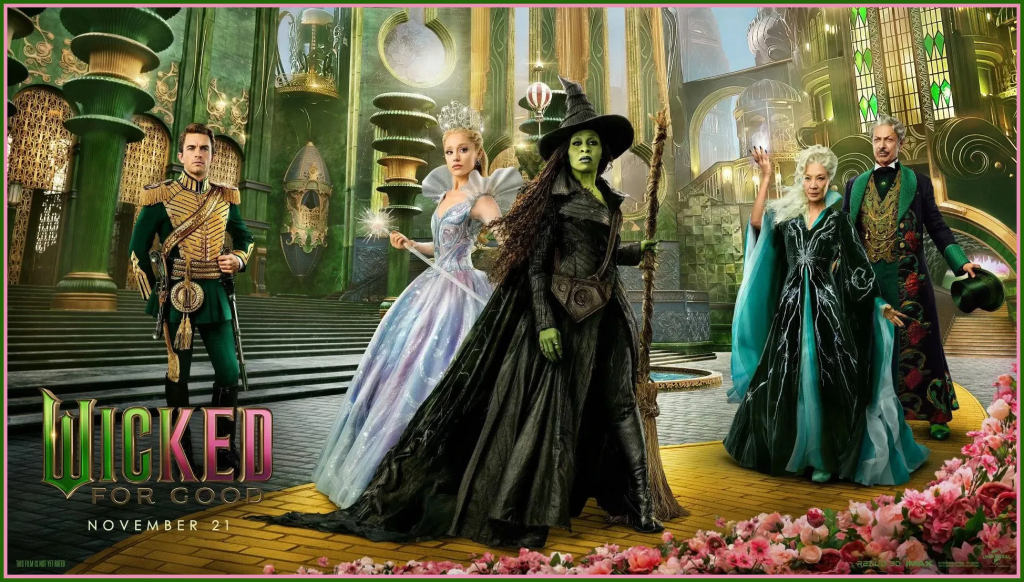
After a year of waiting for the highly-anticipated Wicked: For Good, I was left feeling entertained, yet a bit unsatisfied.
While I still enjoyed the film overall, I found a lot of problems with it, most of which can be attributed back to the source material. The latter half of Wicked on Broadway has never compared to the former, from the catchiness of the songs to the holes in plot (regarding continuity with The Wizard of Oz). I appreciate that a few liberties were taken in the film to try to add depth to the second part, such as new original songs “No Place Like Home, and “The Girl in the Bubble”, and even a few extended scenes.
Still, the pacing felt off and less balanced than before. Certain scenes felt rushed or underdeveloped, unable to mix the comedic elements with the increasingly high stakes. In particular, the series of events after Elphaba and Fiyero became intimate didn’t feel as impactful. Elphaba couldn’t even enjoy her man before getting a vision that her Nessarose was in trouble. Then, she didn’t get to grieve her sister before getting into a bitch slapping contest with Glinda.
On top of that, Fiyero is all of sudden on the scene and risking his life to save Elphaba’s… the same Elphaba who used to have Ozzians laid out by accident now can’t do it on purpose when it mattered most.
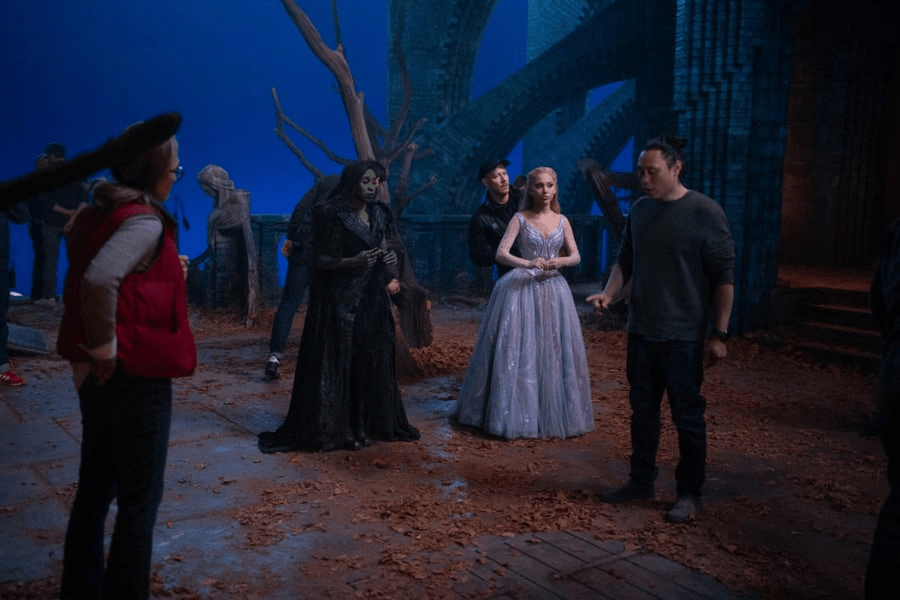
While the aesthetics of this world are beautiful, there were times it was hard to appreciate them due to so many shots being backlit. Further, one of the most important characters of the film was miscast. I love Michelle Yeoh, Lord knows I do… but I fear she was not the best fit for Madame Morrible.
I have mixed feelings about Jon Chu as the director. I love him as well, and while I don’t think every choice he made was perfect, I am grateful that he, like some of the cast, was open to the sapphic “Gelphie” subtext, and tried to hint at their love as much as possible in this PG rated film. (I would be so seated for a higher maturity rated version of Wicked, for several reasons).
I do appreciate the casting of Ariana Grande and Cynthia Erivo, who are both insanely talented and brought so much to their roles, and by extension, the movie as a whole. In fact, some of the most impactful moments of the film are improvised (i.e. the door scene) – which is a testament to Ariana and Cynthia. Their “For Good” performance was touching and one of the better songs of the film. Chu was correct to leave the final shot a surprise to studio execs, which allowed for fans to be genuinely gagged.
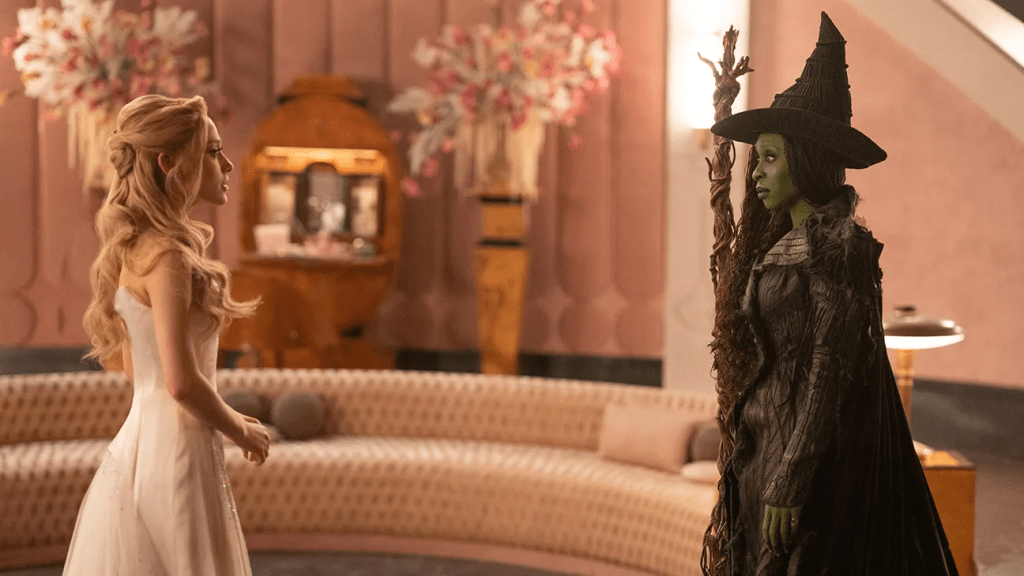
Erivo’s casting in particular deepened the meaning of the franchise for a lot of fans, myself included. Her portrayal of Elphaba, and the connections to being a Black woman in America, take the themes of this story to a whole new level.
Having said that, the radical themes presented in the first film is what makes the second part more of a let down. We were ready to take down Oz! To see Elphaba be all powerful! And to see her actually, even for five minutes, be truly wicked.
Instead Elphaba, who was once the most studious and all powerful in Oz, seemed less studied, less powerful, and at times defeated. With Elphaba now being portrayed by a Black actress, the implications of Glinda’s actions (and the ending) are even worse. Many of the unfortunate events that occur in this story can be traced back to Glinda. Not only was she fake, but she incredibly selfish and weak, which caused significant harm those around her.
In regards to her wedding day — It’s not like Elphaba was trying to seduce Fiyero to go away with her. Fiyero was lowkey always ready to ride for Elphaba. Glinda couldn’t handle not being that girl, and she couldn’t handle losing the love of her life (Elphaba) on her wedding day. I understand her pain, but she didn’t have to set up Nessarose (even though I could care less about her, either).
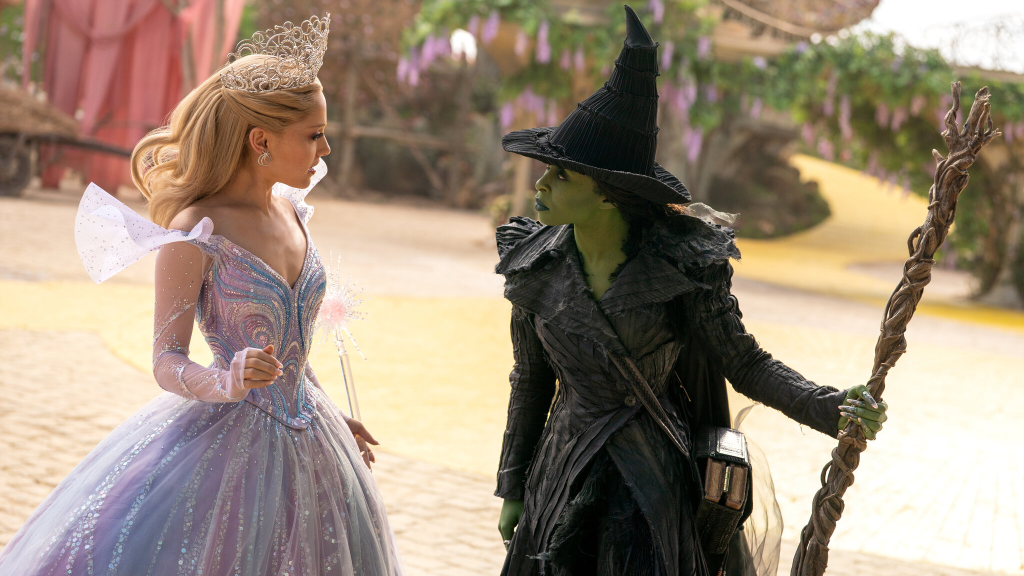
Glinda has pretended her whole life, and she only gains an ounce of bravery once her “best friend” (for whom she did practically nothing to help save) dies. Now she is bestowed the land of Oz, the magic, and the responsibility of upholding what is “Good”.
Even in the first film, their friendship felt unearned. But, I had to remind myself: There were literally no other green people in Oz. Elphaba lived a complicated, lonely life, so of course breadcrumbs of friendship with the most popular girl in the land felt like a feast.
No friend of mine would stand back and watch me die, or let people speak down on my name. No friend of mine would have participated in the charades of the empire unchallenged for that long. Thus, Glinda will never be a real friend or anything else in my eyes.
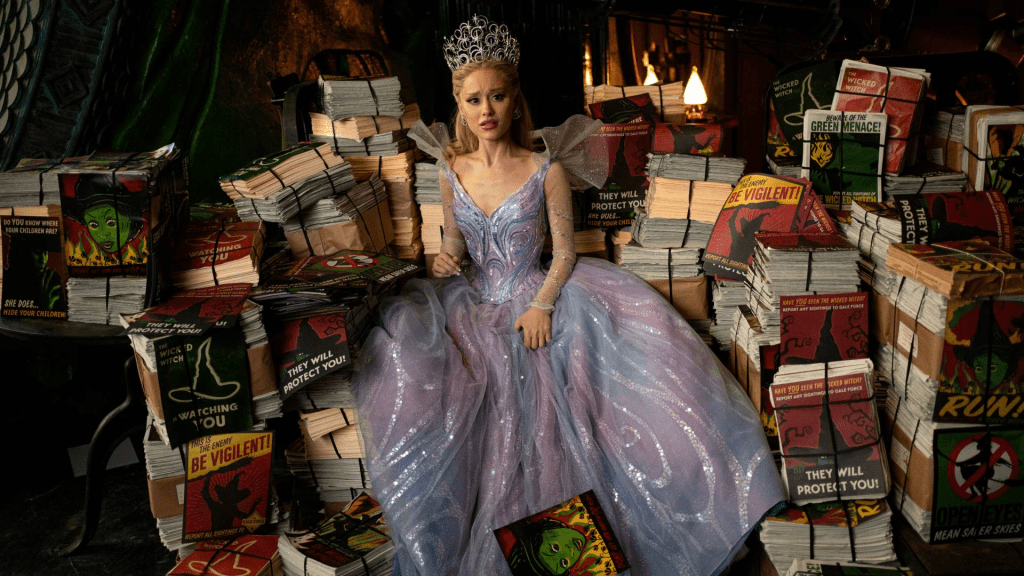
However, I understand that is not true for Elphaba. As aforementioned, she and Glinda love each other, and more than just in a friendship way, which is important to the context of their relationship as well. Nonetheless, Glinda’s inability to stand for something isn’t justified. And while the childhood flashback was cute and helpful for rationalizing her behavior as an adult, it doesn’t absolve her, either.
On the contrary, Fiyero (played by the charming Jonathan Bailey, aka People’s “Sexiest Man Alive“), proved to be a true ally to Elphaba. He saw her for who she was, from the beginning. He was ready and willing to risk it all — rebelling and riding for her when necessary. The character that was once “dancing through life” and felt that “nothing really matters” found something worth fighting for. When it was time to leave Oz, he was ready to follow Elphaba. He instinctually protected her, even though she was technically more powerful than him.
For these reasons, I don’t agree that Fiyero and Elphaba’s love story was forced, or present purely because of heteronormativity. However, I do think Elphaba and Glinda will always love each other more.
Elphaba wanted Glinda to choose her the way Fiyero did. And if she did, they could’ve been in a throuple or something, who knows?
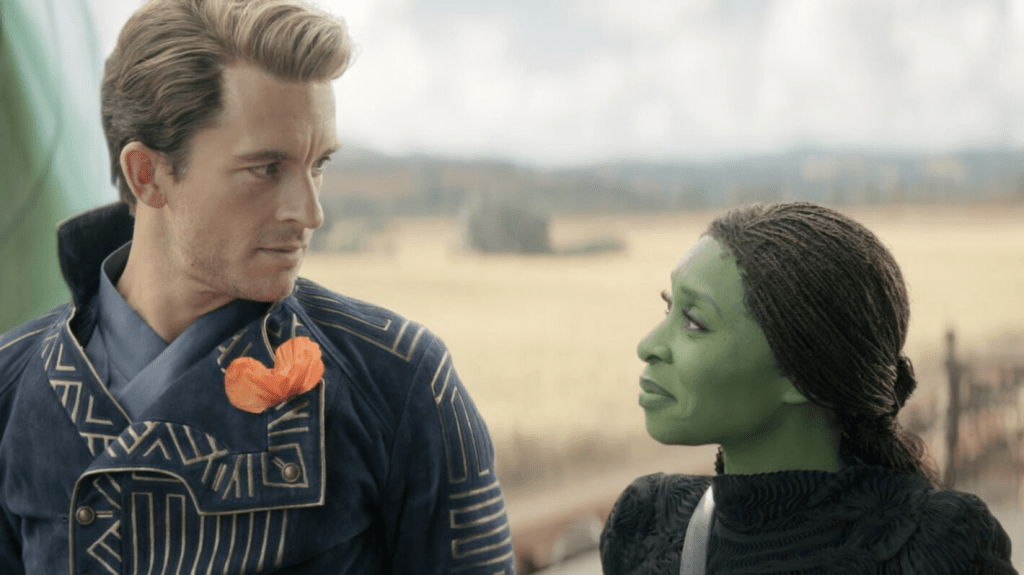
Initially, the ending was really tragic to me not because Glinda and Elphaba don’t get to be together, but because Elphaba’s ending hit too close to home. There are so many parallels between Elphaba’s ostracization in Oz and how Black women are treated in real life. So many Black women have died not getting the credit they were due.
Black women are constantly copied, while never praised. Needed, but never valued. Admired only in secret. Publicly hated on for our aura, and for our power. Elphaba was the most powerful being in Oz. Hated for being green yet emerald signified regal status in the highest city in the land. A white man was credited for something he could only pretend to be, and tried to use her for the power he only wished he had.
At least in faking her death, Elphaba got to live on her own terms. After debriefing with friends, the only solace I could find is that Elphaba needed to move on because she was tired of living that life. Tired of being unappreciated, lied on, and fighting for those that didn’t want to be saved. Maybe the only true peace she could find was in death, unfortunately like many Black women that came before her.
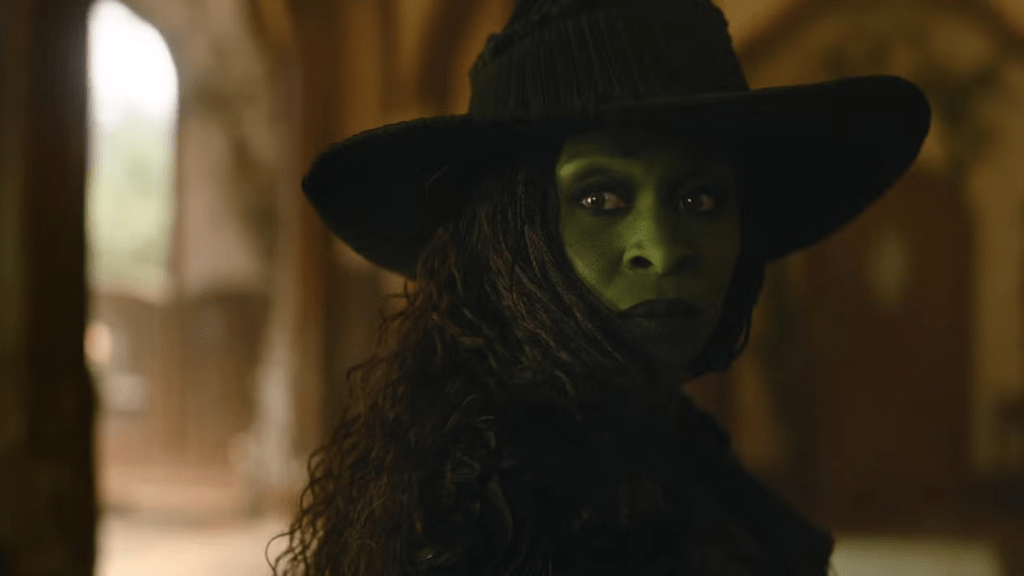
I was still unsettled with the notion that a white woman would live off of Elphaba’s goodwill, that no good deed of hers would not only go unpunished but unrecognized. More than this, the political parallels in these times did not need an ending that leaned into white saviorism.
But my debrief with friends helped again, coming to the conclusion that even if Elphaba had gotten the credit, and the rest of Oz knew she was alive, they would never leave her alone. They would still want to use her for what she could do for them, she would never be free to have a life of her own.
Thus, I am holding space for Elphie and what makes her happy. And she gets to ride away with Fiyero who now literally has the “ding-a-ling of gold”. (IYKYK: Fiyero is now made of straw but his member isn’t…word to a fun song the Braxton girls once sang).
In the end Elphaba chose herself and her peace, and Glinda got she wanted, but at a very expensive cost.
Final Thoughts
While this film is not perfect, I still consider it to be good art as it is entertaining and encourages discussion. Art should make you feel something. Admittedly, I’ve been in my feelings for a year about Elphaba. The Wizard of Oz (released 1939) is the most-watched film of all time, so no wonder Wicked is breaking box office records and connecting deeply with the masses, even after all this time.
Wicked (and Elphaba) will be that girl, regardless of her flaws. And thus, it’s a certified bop. 🍿🍿🍿
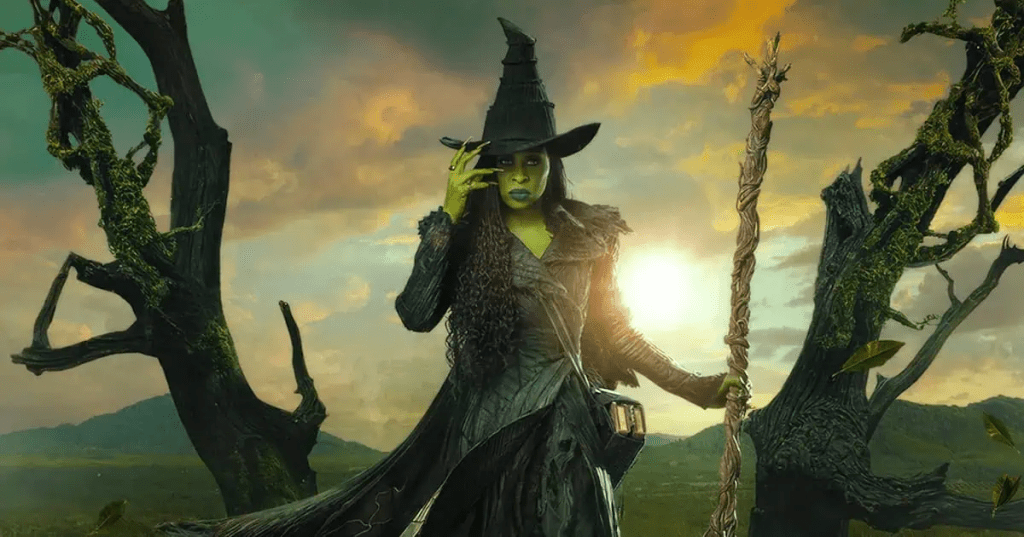
 Still In Bloom
Leave a comment